




The PDC rankings system – known as the order of merit – is one of the most important metrics in the sport.
Qualification for major tournaments such as the World Championship and World Matchplay depend on your position in the rankings.
Aside from the main order of merit, there are secondary tables such as the European Championship order of merit and Pro Tour order of merit.
All of the PDC’s ranking systems updated in real-time can be found here.
Each system relates to a different tournament and here we break down the importance of each one and how each player achieves their ranking.

How the main order of merit works
The main order of merit determines a player’s world ranking – currently topped by World Champion Luke Humphries.
The rankings are determined by how much prize money a player has won in a two-year rolling period in ranking events – £1 = 1 ranking point.
For example, Humphries won £500k for lifting the World Championship earlier this year, receiving 500k ranking points.
It is important to note that non-ranked events such as World Series events and the Premier League are not ranked and, therefore do not contribute to the order of merit.
This is why Premier League Champion Luke Littler – who lifted the Premier League trophy in May – is only ranked world number 24.
As it’s a two-year rolling system, players are defending the money they earned from an event two years prior.
For example, Michael van Gerwen pocketed £200k for lifting the World Matchplay in 2022.
This year, he lost in the final and trousered £100k, therefore losing £100k from his ranking overall.
As Littler has only been a professional since the start of the year, he only has seven months’ worth of ranking events compared to his peers’ 24 months.
His true ranking will be reflected after the conclusion of the 2026 World Championship.
Why is the top 16, 32 and 64 so important?
Playing in the biggest events on TV offers players greater opportunity to earn ranking money and boost their position.
Any player in the top 16 automatically qualifies for the World Matchplay as a seed, as well as confirming their spot in the World Grand Prix – though only the top eight are seeded here.
The rest of the places in the respective tournaments are made up of the top players in the Pro Tour order of merit – this will be covered later.
The World Championship is the holy grail in the sport and just reaching Ally Pally can be career-changing due to the heavily weighted prize money on offer.
The showpiece event has a staggering 96-person field and offers the world’s top 32 seeded positions.
The next milestone is the top 64.
Any player who has held a PDC Tour Card for at least two years must finish inside the top 64 following the World Championship, or they will lose their status as a professional.
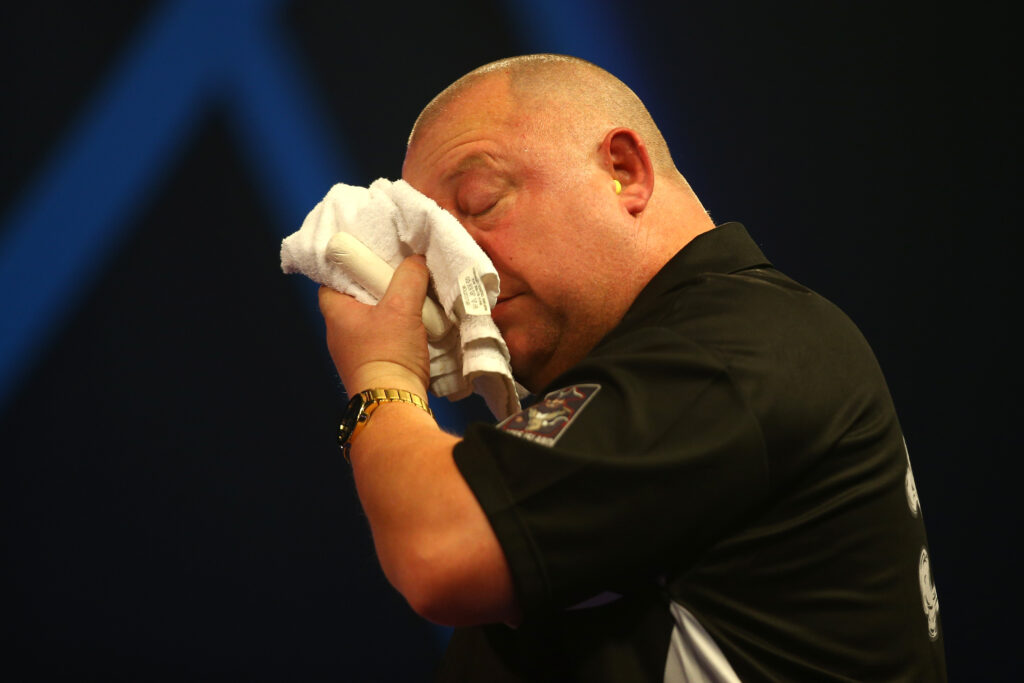
As it stands, players such as Mensur Suljovic and Mervyn King will lose their tour card next January as provisionally they are set to finish 69th and 71st respectively.
Pro Tour, European Championship and Players Championship Finals order of merits
Unlike the main order of merit, the Pro Tour rankings are based on a one-year rolling system.
It takes into account any money earned in the 30 Players Championship events across the season, as well as 13 European Tour events.
The top 16 players in the Pro Tour order of merit who are not in the world’s top 16 earn their place in the World Matchplay and World Grand Prix.
These do not reset at the start of the season i.e. money earned from Pro Tour events from the end of the 2023 World Matchplay to the start of the 2024 tournament counted towards Blackpool qualification this year.
Similar to the main order of merit, this number expands to 32 for the World Championship.
The rankings for the European Championship and Players Championship Finals race are independent from the other ranking systems.
To earn a spot in the European Championship, a player must finish in the top 32 of the tournament’s ranking system which only counts money earned on the European Tour.
This explains why Gary Anderson has not played in the event since 2016 as he has opted not to compete on the European Tour – though he will be in this year’s event after his successful return to the tour.
Likewise, qualification for the Players Championship Finals in November only considers money earned across the 30 Players Championship events across the year.
All 128 tour card holders are eligible to compete in these 30 events and the top 64 players book their spot in Minehead for the Finals.
Future of the rankings
The PDC’s ranking system has positives and negatives.
It effectively rewards players who succeed in the biggest events on the calendar, though this has faced criticism.
The ranking money offered for the World Championship is incredibly top-heavy compared to other events, and some argue a purple patch at Alexandra Palace should not be rewarded over consistency throughout the year.
Despite some criticism, many fans and players like the current system and PDC Chief Executive Matt Porter has made no suggestion it is changing in the foreseeable future.